
2016 ford f150 owners manual
Welcome to the world of the 2016 Ford F-150! This guide, mirroring excellent resources, details mastering your new vehicle for optimal performance and enjoyment.
Overview of the Vehicle
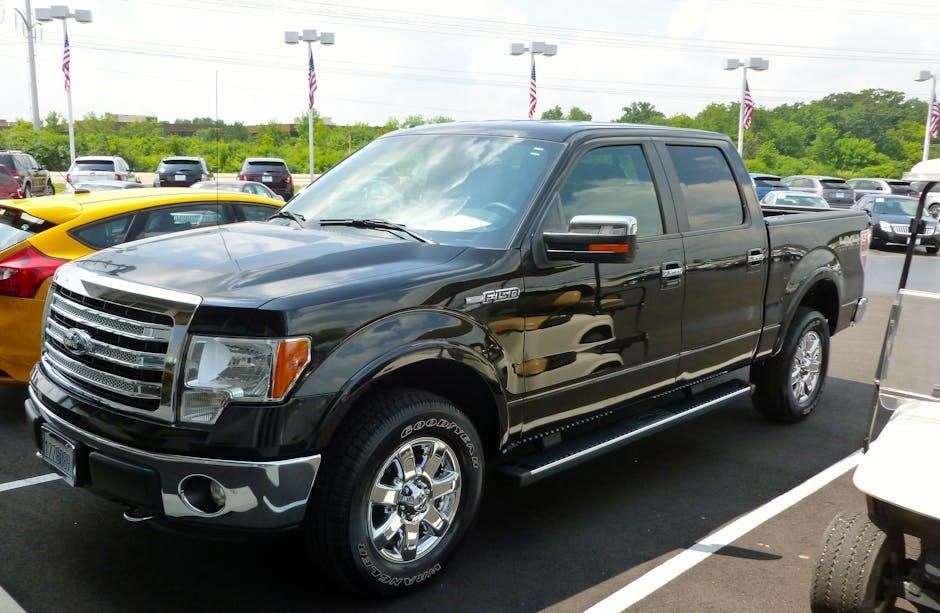
The 2016 Ford F-150 represents a significant leap forward in full-size pickup truck design, boasting a high-strength, military-grade aluminum alloy body and a fully boxed frame. This combination delivers best-in-class payload and towing capabilities without sacrificing fuel efficiency. Available in a wide array of configurations – including Regular Cab, SuperCab, and SuperCrew – and trim levels, the F-150 caters to diverse needs, from work-ready functionality to luxurious comfort;
Engine options range from a 3.5L EcoBoost V6 to a robust 5.0L V8, each engineered for impressive power and responsiveness. The interior features a spacious cabin with available technology like Ford SYNC, offering seamless connectivity and entertainment. Understanding these core features, as detailed in your owner’s manual, is crucial for maximizing your F-150 experience and ensuring years of reliable service.
Importance of the Owner’s Manual
Your 2016 Ford F-150 owner’s manual is more than just a collection of pages; it’s your comprehensive guide to understanding and maintaining your vehicle. It contains vital information regarding operation, safety features, maintenance schedules, and warranty details. Familiarizing yourself with its contents ensures you’re equipped to handle various situations, from routine checks to unexpected issues.
Ignoring the manual can lead to improper vehicle operation, potentially causing damage or voiding warranty coverage. The manual details specific instructions for utilizing features like Ford SYNC and understanding dashboard indicators. Following the recommended maintenance schedule, outlined within, will prolong your F-150’s lifespan and maintain its optimal performance. Treat it as an essential component of your ownership experience!

Understanding Your Vehicle
Dive deeper into your F-150’s specifics! This section unlocks crucial details about identification, indicators, and keyless features for confident operation.
Vehicle Identification Number (VIN) & Labels
Locating Your VIN: Your Vehicle Identification Number (VIN) is a unique 17-character code crucial for identifying your specific 2016 Ford F-150. You’ll find it on the driver’s side dashboard, visible through the windshield. It’s also located on the driver’s side doorjamb label and your vehicle registration and insurance documents.
Decoding the VIN: The VIN provides valuable information about your truck’s manufacturing details, including the year, make, model, engine type, and assembly plant. Ford uses this code for warranty claims, safety recalls, and tracking vehicle history.
Certification Labels: Several certification labels are affixed to your F-150, providing details about compliance with federal and state emission standards, tire information, and other important specifications. Familiarize yourself with these labels as they contain vital data regarding your vehicle’s configuration and regulatory adherence.
Dashboard Symbols and Indicators
Understanding the Instrument Cluster: Your 2016 Ford F-150’s instrument cluster displays a variety of symbols and indicators providing crucial information about your vehicle’s operation. Familiarizing yourself with these is essential for safe driving.
Warning Lights: Red warning lights indicate potentially serious issues requiring immediate attention, such as low oil pressure, engine overheating, or brake system malfunction. Yellow or amber lights typically signal a less critical, but still important, condition needing investigation.
Informational Indicators: Green and blue indicators provide information about system status, like cruise control engagement, turn signal activation, or high beam usage. Consult your owner’s manual for a comprehensive explanation of each symbol and recommended actions when illuminated.
Keyless Entry & Remote Features
Convenience at Your Fingertips: The 2016 Ford F-150 offers a sophisticated keyless entry system and remote features designed for enhanced convenience and security. Your remote key fob allows for locking and unlocking doors, activating the panic alarm, and even remotely starting the engine (if equipped).
Remote Start Operation: To remotely start your F-150, press and hold the remote start button on your key fob. Ensure the vehicle is in Park and the key fob is within range. The engine will run for a pre-determined time, or until you press the brake pedal.
Programming & Pairing: Refer to your owner’s manual for detailed instructions on programming additional key fobs and troubleshooting any remote feature issues. Proper pairing ensures optimal functionality.
Operating Your 2016 F-150
Let’s get rolling! This section details the core functions of driving your F-150, from initial startup procedures to understanding its transmission capabilities.
Starting, Stopping & Driving
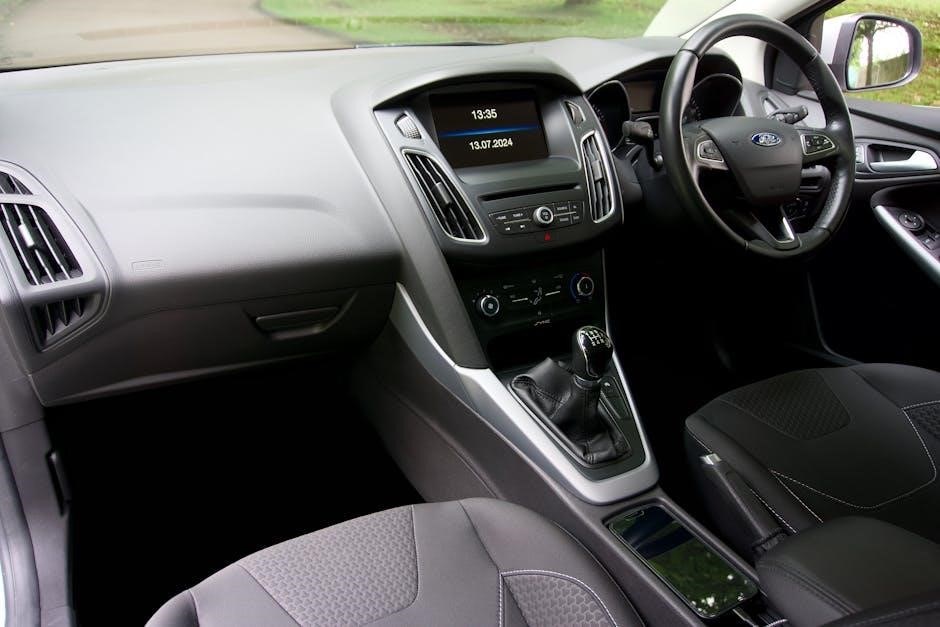
Ignition and Startup: Your 2016 F-150 utilizes a push-button start system. Ensure the key fob is inside the vehicle. Press the brake pedal firmly and then press the start/stop button. The engine will come to life! For manual transmissions, depress the clutch as well.
Driving Procedures: Familiarize yourself with the accelerator and brake pedal responsiveness. Gentle inputs provide smooth acceleration and controlled deceleration. Always maintain a safe following distance. Be mindful of the vehicle’s size, especially when maneuvering in tight spaces.
Stopping the Vehicle: To bring your F-150 to a halt, gently apply the brake pedal. Ensure the vehicle is completely stopped before shifting into Park (P). Engage the parking brake for added security, particularly on inclines; Remember to turn off the engine by pressing the start/stop button again.
Safety First: Always buckle your seatbelt and adhere to all traffic laws. Prioritize safe driving practices for yourself and others on the road.
Understanding the Transmission
Transmission Options: The 2016 Ford F-150 offers several transmission choices, including a six-speed automatic and a more efficient ten-speed automatic, depending on the engine and trim level. Understanding your specific transmission is crucial for optimal performance.
Drive Modes: Many F-150 models feature selectable drive modes (Normal, Tow/Haul, Snow/Wet, Manual). These modes adjust shift points and engine behavior to suit different driving conditions. Tow/Haul is essential when towing heavy loads, providing enhanced control and preventing overheating.
Manual Shift Mode: The automatic transmissions allow for manual gear selection using the shift lever. This provides greater control during challenging terrain or when you desire a more engaging driving experience.
Proper Shifting: Avoid abrupt or harsh shifting. Smooth transitions contribute to a longer transmission lifespan. Regularly check the transmission fluid level to ensure proper lubrication and operation.
Fueling & Fuel Requirements
Recommended Fuel: Your 2016 Ford F-150 is designed to run on regular unleaded gasoline with an octane rating of 87. However, some engines may benefit from premium fuel, particularly during demanding conditions like towing or hauling heavy loads. Consult your vehicle’s specific engine specifications for optimal performance.
Fuel Capacity: The F-150’s fuel tank capacity varies depending on the cab configuration and bed length, ranging from 23 to 36 gallons. Knowing your tank size helps estimate driving range and plan refueling stops effectively.
Fuel Door Location: The fuel door is typically located on the driver’s side of the vehicle. Ensure the vehicle is turned off before refueling. Always use a clean fuel nozzle and avoid overfilling the tank.
Ethanol Content: Fuels containing ethanol up to 15% (E15) may be used, but higher ethanol blends (like E85) are generally not recommended unless your vehicle is specifically designed for them.

Maintenance & Care
Preserving your F-150’s longevity requires diligent adherence to the recommended maintenance schedule, ensuring peak performance and preventing costly repairs down the road.
Recommended Maintenance Schedule
Maintaining your 2016 Ford F-150’s reliability hinges on following a consistent maintenance schedule. At 7,500 miles (or six months, whichever comes first), crucial services include an oil and filter change, tire rotation, and a thorough inspection of brake pads, fluids, and belts.
By 15,000 miles, add a cabin air filter replacement to the routine. Every 30,000 miles necessitates a more comprehensive check, encompassing fuel filter replacement, differential service, and a detailed inspection of the steering and suspension components.
Don’t overlook the importance of coolant flushes (every 60,000 miles) and spark plug replacements (typically around 100,000 miles). Regularly consulting your owner’s manual for specific intervals tailored to your driving conditions is paramount for optimal vehicle health and longevity.
Fluid Checks & Replacements (Oil, Coolant, etc.)
Regular fluid checks are vital for your 2016 F-150’s performance. Engine oil should be checked weekly and replaced every 7,500 miles (or six months) with the recommended grade – typically 5W-20. Coolant levels should be inspected monthly, topped off as needed, and fully flushed every 60,000 miles.
Brake fluid, power steering fluid, and transmission fluid also require periodic attention. Brake fluid should be checked for contamination and replaced every two to three years. Power steering fluid levels should be monitored, and the fluid changed if it appears dark or dirty.
Transmission fluid condition is crucial; consult your owner’s manual for specific replacement intervals based on driving habits. Ignoring fluid maintenance can lead to costly repairs, so diligence is key!
Tire Information & Maintenance
Maintaining proper tire pressure is paramount for your 2016 F-150’s safety and fuel efficiency. Refer to the sticker on the driver’s side doorjamb for recommended PSI – do not use the maximum pressure listed on the tire sidewall. Check pressure monthly, and always when the tires are cold.
Regularly inspect tires for wear and damage, including cuts, bulges, and uneven tread wear. Rotate tires every 5,000-7,500 miles to ensure even wear and extend their lifespan. Proper alignment is also crucial; address any steering issues promptly.
Tire replacement should be done in sets to maintain balanced handling. Consider the original tire size and type when replacing, and always ensure the new tires have the correct load rating.

Safety Features & Systems
Your 2016 F-150 is equipped with advanced safety technologies, including airbags, AdvanceTrac®, and Ford SYNC®, designed to protect you and your passengers.
Airbag System
Your 2016 Ford F-150 is equipped with an advanced airbag system designed to provide supplemental protection in the event of a collision. This system includes driver and passenger front airbags, as well as side-impact airbags mounted in the seats.
It’s crucial to understand that airbags are designed to work with seat belts, not replace them. Always ensure all occupants are properly restrained. The system may not deploy in all collisions, depending on the severity and angle of impact.
Certain conditions, like being too close to the steering wheel or having objects between you and the airbag, can increase the risk of injury during deployment. Never place anything in front of airbags. Regularly inspect airbags for any signs of damage or tampering, and consult a qualified technician for any concerns. Proper maintenance is key to ensuring optimal airbag performance.
AdvanceTrac® with Roll Stability Control
The 2016 Ford F-150 features AdvanceTrac® with Roll Stability Control (RSC), an electronic system designed to enhance stability, particularly during evasive maneuvers or on slippery surfaces. This system utilizes sensors to monitor the vehicle’s direction and stability, automatically applying brakes to individual wheels to help maintain control.
RSC specifically helps prevent rollovers by detecting potential instability and intervening to reduce vehicle lean. While incredibly effective, AdvanceTrac® and RSC are not substitutes for careful driving. Always adjust your speed and driving style to suit road conditions.
A flashing AdvanceTrac® indicator light means the system is actively intervening. The system can be temporarily disabled, but Ford recommends re-enabling it for optimal safety. Understanding its limitations and proper function is vital for safe operation of your F-150.
Ford SYNC® System & Features
Your 2016 Ford F-150 is equipped with the Ford SYNC® system, a powerful communication and entertainment platform. SYNC® allows for hands-free calling, audio streaming, and voice control of various vehicle functions. It utilizes Bluetooth technology to connect with compatible smartphones, enabling convenient access to your digital life while on the road.
SYNC® features include voice recognition for making calls, selecting music, and accessing navigation. The system also offers emergency assistance, connecting you to 911 in the event of an accident. Explore the SYNC® settings to personalize your experience and discover all available features.
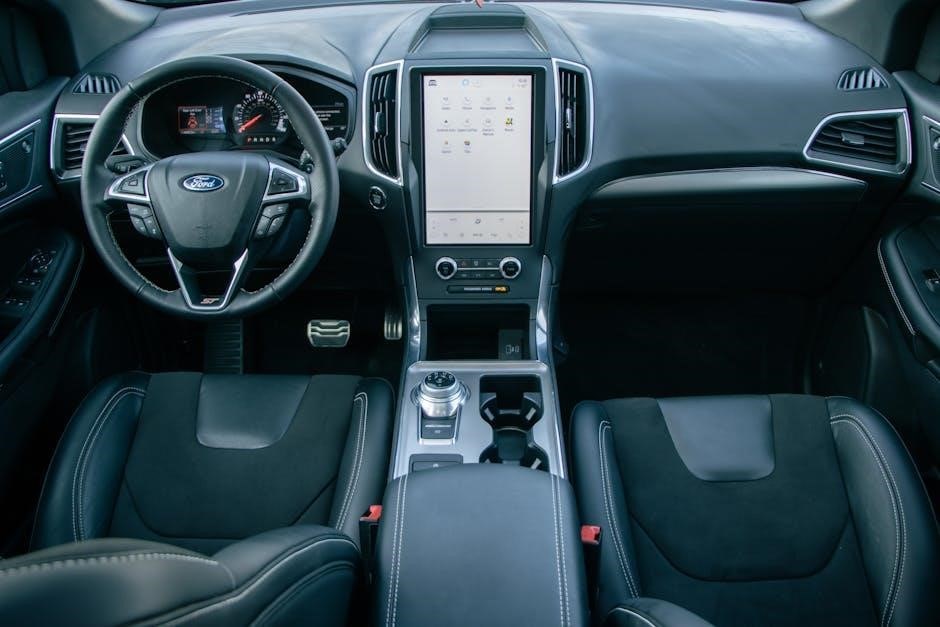
Regular software updates are recommended to ensure optimal performance and access to the latest features. Refer to the Ford website for update instructions and support resources. Familiarize yourself with SYNC® to enhance your driving experience.

Troubleshooting & Common Issues
Encountering problems? This section provides guidance for jump-starting, basic diagnostics, and resolving frequent issues with your 2016 Ford F-150 efficiently.
Jump Starting Procedures
Caution: Jump starting can be hazardous. Follow these procedures carefully to avoid injury or damage to your 2016 Ford F-150’s electrical system. Ensure both vehicles have compatible voltage systems (typically 12V). Position the vehicles close enough for the jumper cables to reach, but do not allow them to touch.
First, turn off both vehicles. Connect the positive (+) cable to the positive terminal of the discharged battery, then to the positive terminal of the good battery. Next, connect the negative (-) cable to the negative terminal of the good battery, and then to a clean, unpainted metal surface on the disabled vehicle’s engine block – away from the battery.
Start the vehicle with the good battery and let it run for a few minutes. Then, attempt to start the disabled vehicle. If it doesn’t start immediately, wait a few more minutes and try again. Once started, carefully disconnect the cables in the reverse order of connection. Allow your F-150 to run for at least 20 minutes to recharge the battery. If repeated jump starts are needed, have the battery and charging system inspected by a qualified technician.
Basic Diagnostic Checks
Regular checks can prevent minor issues from becoming major repairs on your 2016 Ford F-150; Begin with a visual inspection: check for fluid leaks under the vehicle – oil, coolant, or transmission fluid. Examine tire pressure and tread depth for even wear. Inspect all lights (headlights, taillights, brake lights, turn signals) to ensure they are functioning correctly.
Listen for unusual noises while the engine is running – knocking, hissing, or squealing. Pay attention to the dashboard warning lights. A consistently illuminated “Check Engine” light requires professional diagnosis using an OBD-II scanner.
Check the fluid levels: oil, coolant, brake fluid, power steering fluid, and windshield washer fluid. Low levels may indicate a leak or consumption issue. Remember, these are basic checks; for complex problems, consult a qualified mechanic for a thorough diagnosis and repair.

Warranty Information
Your 2016 Ford F-150 is protected by a comprehensive warranty, offering peace of mind against potential defects in materials or workmanship. The basic bumper-to-bumper warranty typically covers 3 years/36,000 miles, whichever comes first. The powertrain warranty, covering engine and transmission components, extends to 5 years/60,000 miles.
Corrosion warranty coverage varies, often lasting 5 years/unlimited miles. Specific details regarding coverage, exclusions, and claim procedures are outlined in your official warranty booklet, included with your vehicle’s documentation.
To maintain warranty validity, adhere to the recommended maintenance schedule detailed in the owner’s manual. Keep accurate records of all servicing performed. Contact your authorized Ford dealership for any warranty-related questions or to initiate a claim.